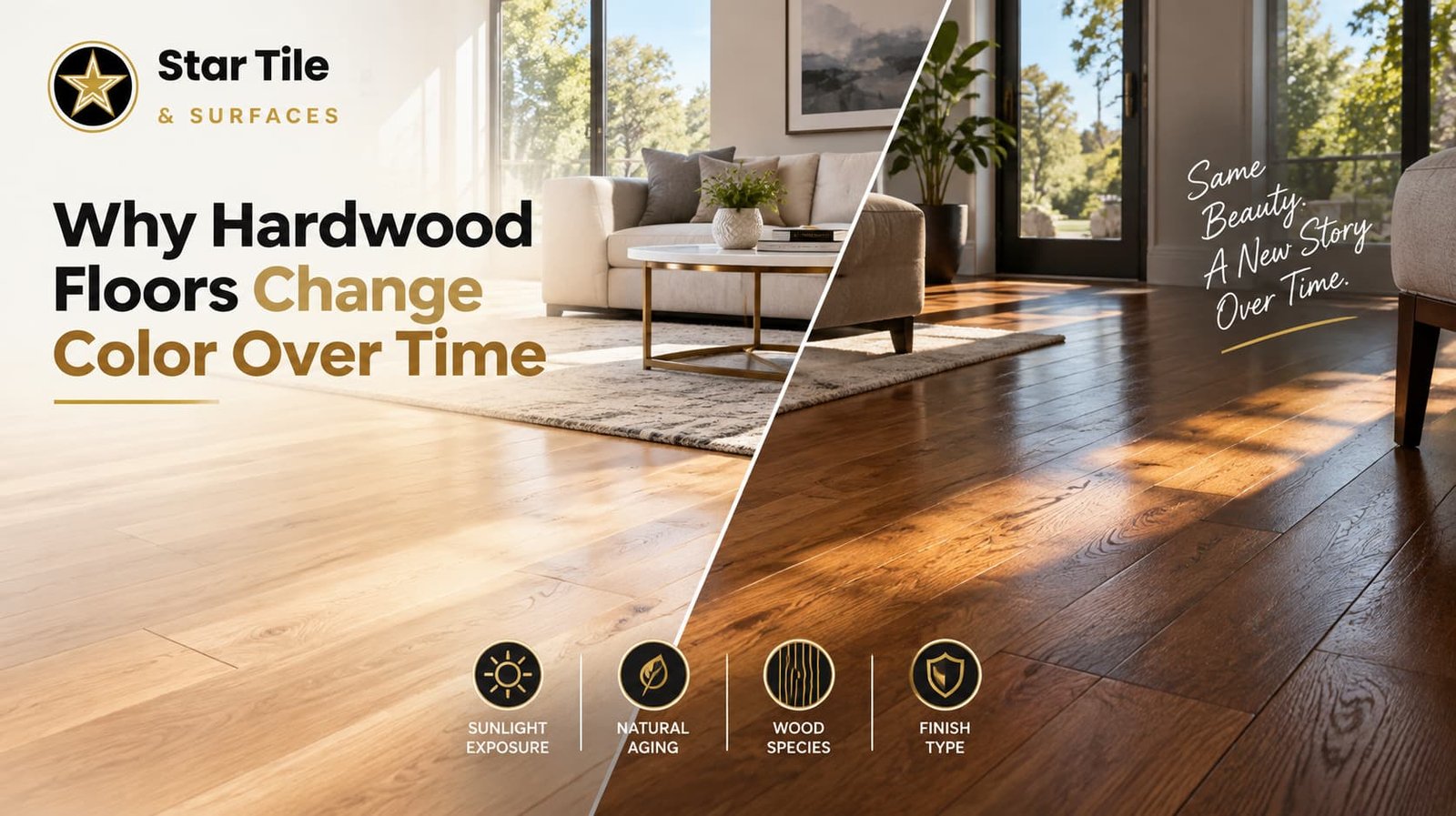
You’ve noticed your hardwood floors don’t look quite the same as they did when they were installed. Maybe there’s a lighter rectangle where a rug used to be, or the wood near the windows has darkened. This is completely normal; hardwood is a natural material that reacts to its environment.
Understanding why this happens helps you manage it and know when color changes are just aging versus signs of a real problem.
The Main Causes of Hardwood Color Changes
Hardwood floors shift color for several reasons, most of which are natural and expected. Here’s what drives the change:
UV Light Exposure
Sunlight is the biggest culprit. UV rays break down the chemical structure of wood fibers and finishes, causing fading or darkening depending on the species. Most hardwoods darken with sun exposure; cherry and Brazilian cherry are famous for this, but some, like maple, actually lighten.
You’ll see this most clearly where rugs have been sitting for months. Pull them up, and you’ll find a sharp contrast.
Natural Wood Oxidation
Wood reacts with oxygen in the air. This process, called oxidation, happens whether the floor sees sunlight or not. It’s slower than UV damage but steady. White oak tends to take on a yellow or amber tone. Walnut often lightens from its original dark chocolate color.
Wood Species Differences
Different species age differently. Cherry starts pale and deepens to a rich reddish-brown. Brazilian cherry goes even darker. Hickory and ash stay more stable. If you’re choosing new floors and want minimal color change over time, go with hickory, ash, or white oak; they’re the most predictable.
Finish Type and Quality
The protective finish on your floor also changes color. Oil-based polyurethane yellows over time, especially in low-light areas. Water-based finishes stay clearer but still break down under UV exposure. If you’re considering a floor remodeling project and want floors that hold their color longer, ask about UV-resistant finishes.
Uneven Light and Furniture Placement
Rooms with big south-facing windows see dramatic color shifts in high-traffic sun zones. Furniture, rugs, and curtains block light, creating permanent shadows in the wood’s color. This is why you get those ghostly outlines when you move a couch after five years.
Normal Aging vs. Signs of Damage
Most color change is harmless. But sometimes it signals a problem.
Normal Color Change Looks Like:
- Gradual, even darkening or lightening across sun-exposed areas
- Amber or yellow tones developing in oil-finished floors
- Defined shadow lines where rugs or furniture sat
- Slight richness or depth developing over years
Damage or Moisture Problems Look Like:
- Dark stains or water rings that weren’t there before
- Gray or black discoloration, especially between boards
- Warping, cupping, or buckling along with color change
- White hazy patches (finish failure)
If you see any of the second list, you’re dealing with moisture intrusion, finish breakdown, or mold, not natural aging. That needs attention.
How to Minimize Uneven Fading in Plano Homes
You can’t stop hardwood from aging, but you can slow it down and keep the color more uniform.
Control Sunlight
Use UV-blocking window film, sheer curtains, or blinds during peak sun hours. In Dallas-Fort Worth, that’s roughly 10 a.m. to 4 p.m. in summer. You don’t need to live in a cave; just diffuse the harshest direct light.
Rotate Rugs and Furniture
Move area rugs every few months so the whole floor ages evenly. Shift furniture slightly once or twice a year. This is the easiest way to avoid dramatic contrast lines.
Maintain the Finish
Keep the protective topcoat intact. Clean with pH-neutral hardwood cleaners, never harsh chemicals. Recoat the finish every 3-5 years to maintain UV protection.
When to Refinish or Replace
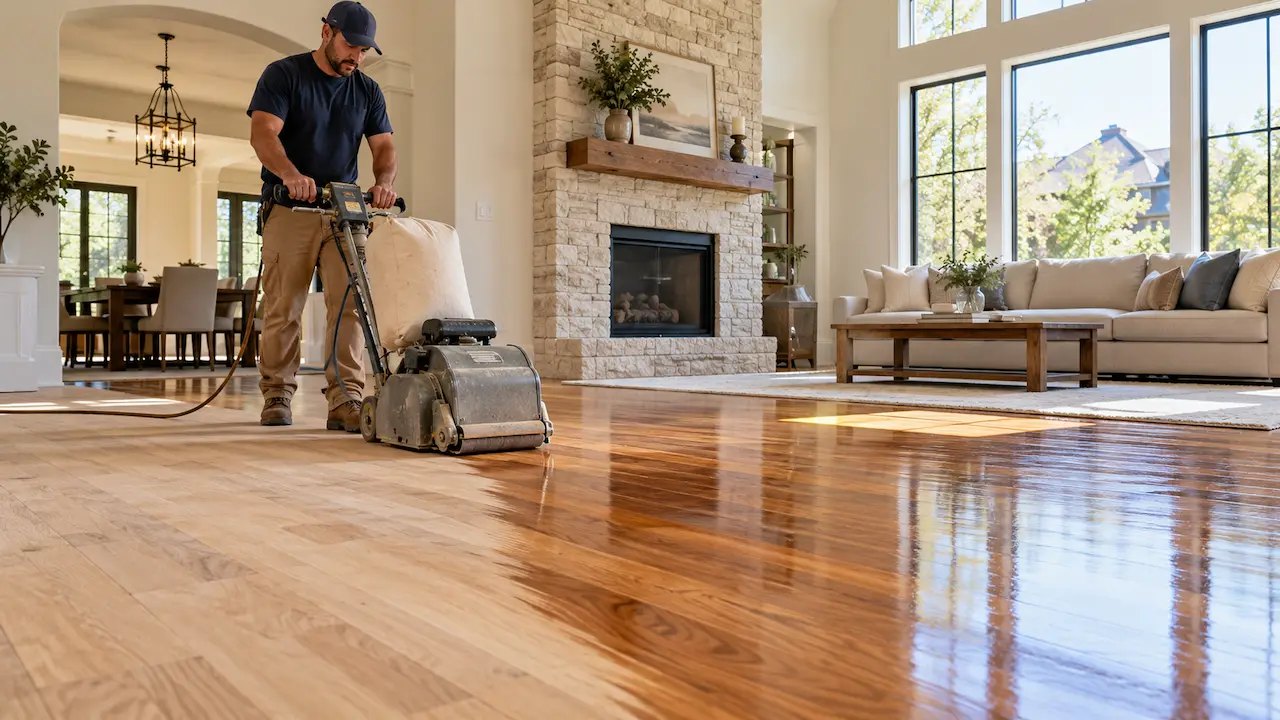
If your floor has aged unevenly and you hate the look, refinishing can bring it back to a uniform color. Sanding removes the oxidized top layer and the old finish, exposing fresh wood. You can then apply a new stain and UV-resistant topcoat.
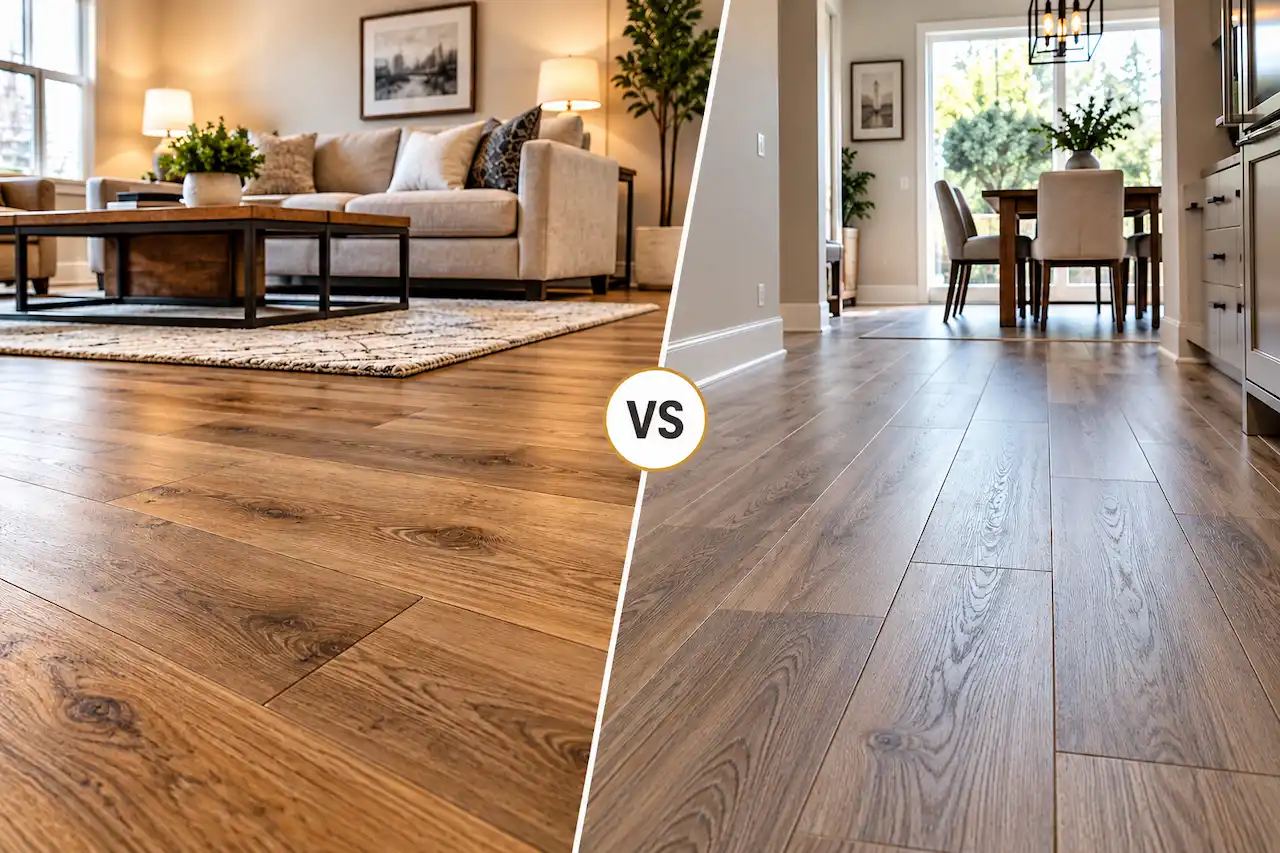
If the only issue is normal color variation and the floor is still structurally sound, refinishing is expensive, and you’ll be back in the same spot in another 10 years unless you control the light. If you’re tired of the maintenance, porcelain wood-look tile is worth considering; it mimics hardwood perfectly and never oxidizes or fades.
Frequently Asked Questions
How long does it take for hardwood floors to change color?
Most noticeable changes happen in the first 6-12 months after installation, especially with species like cherry. After that, the process slows but continues gradually over the life of the floor.
Will hardwood floors eventually stop changing color?
No. As long as the floor is exposed to light and air, it will continue to oxidize and shift color. The rate slows significantly after the first few years, but it never fully stops.
Can I reverse color changes in hardwood floors?
Only through refinishing. Sanding the floor removes the oxidized layer and aged finish, exposing fresh wood. You can then restain to your desired color.
Does hardwood flooring near windows always fade faster?
Yes. UV exposure is cumulative. Floors within 3-5 feet of south- or west-facing windows in Plano see the most dramatic changes. East-facing windows cause moderate shifts, and north-facing windows cause the least.
Ready to get started in Plano?
Star Tile & Surfaces is here to help with why hardwood floors change color in Plano. Reach out today, and we’ll walk you through your options, answer your questions, and book a time that works for you.
Call +1 (214) 605-0050 or visit Star Tile & Surfaces to schedule your Plano appointment.