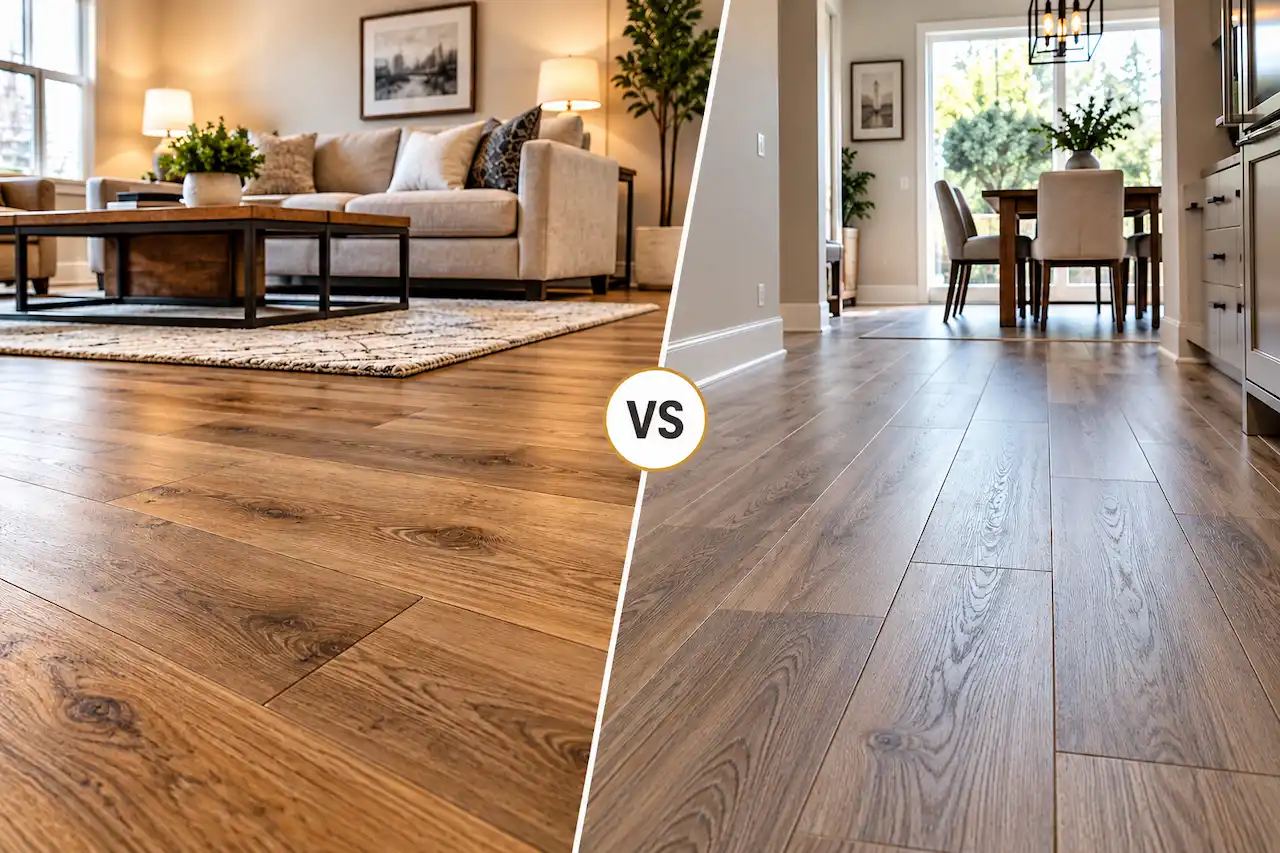
You’re comparing luxury vinyl plank and laminate because they’re both durable, budget-friendly alternatives to hardwood. They look similar in photos, cost about the same, and both show up in every flooring showroom. But they perform completely differently in real-world Plano conditions especially when it comes to water, heat, and long-term wear.
Here’s what actually matters when choosing between the two for a Dallas-Fort Worth home.
Side-by-Side Comparison: LVP vs Laminate
When we’re helping homeowners choose flooring for a floor remodeling project, this is the breakdown that matters most:
| Feature | Luxury Vinyl Plank (LVP) | Laminate |
|---|---|---|
| Water Resistance | 100% waterproof (vinyl core) | Water-resistant surface only; core swells if soaked |
| Cost (Installed) | $4–$8 per sq ft | $3–$7 per sq ft |
| Lifespan | 15–25 years | 10–20 years |
| Underfoot Feel | Softer, slightly flexible | Harder, more like real wood |
| Scratch Resistance | Good (can dent with heavy furniture) | Excellent (harder surface) |
| Refinishing | Cannot be refinished | Cannot be refinished |
Water Resistance: The Biggest Difference
This is where LVP wins without question. Luxury vinyl plank is completely waterproof the core, the surface, all of it. You can install it in bathrooms, laundry rooms, and kitchens without worry.
Laminate has a water-resistant top layer, but the core is still wood-based fiberboard. If water sits on it for more than a few hours or seeps through the seams, the planks swell and buckle.
In Plano, where AC condensation, humidity swings, and the occasional plumbing issue are part of homeownership, LVP is the safer bet for any room with potential moisture exposure.
Durability and Wear Layer Thickness
Laminate has a harder surface and resists scratches better than most LVP products. It’s a good choice for high-traffic areas if you have large dogs or move heavy furniture often.
LVP is softer underfoot, which feels better to walk on but can dent under extremely heavy furniture or appliances if you’re not using furniture pads. That said, quality LVP with a 20-mil wear layer or thicker holds up well for decades in typical residential use.
Neither product can be sanded or refinished. Once the wear layer is damaged, you’re replacing planks.
Installation and Subfloor Requirements
Both LVP and laminate use click-lock floating installation, which means they don’t get glued or nailed down. This makes them faster and cheaper to install than tile or hardwood.
Laminate requires a completely smooth, dry subfloor. Even small moisture issues can cause problems long-term. LVP is more forgiving it can go over slightly uneven subfloors and doesn’t require a moisture barrier in most cases.
If you’re installing over concrete slab (common in Plano), LVP is usually the easier choice.
Cost Breakdown
Material costs overlap quite a bit, but installation complexity can change the final price:
- Basic laminate: $3–$5 per sq ft installed
- Mid-range laminate: $5–$7 per sq ft installed
- Basic LVP: $4–$6 per sq ft installed
- Premium LVP: $6–$8 per sq ft installed
LVP tends to cost slightly more for high-end products, but the gap is minimal. The bigger factor is whether your subfloor needs prep work laminate is pickier and may add cost if leveling is required.
Which One Should You Choose?
Go with LVP if:
- You’re installing in bathrooms, kitchens, laundry rooms, or basements
- You want the most water protection possible
- You prefer a softer, warmer feel underfoot
- Your subfloor has minor moisture concerns
Go with laminate if:
- You’re installing in bone-dry areas like bedrooms or living rooms
- You want the hardest, most scratch-resistant surface
- You prefer a floor that feels more like real hardwood
- Your subfloor is perfectly level and completely dry
Frequently Asked Questions
Can luxury vinyl plank be installed in Plano’s heat?
Yes, but let the planks acclimate in the room for 48 hours before installation. LVP can expand slightly in extreme heat, so proper spacing around walls and transitions is critical.
Does laminate flooring hold up in Texas humidity?
Standard laminate struggles with humidity swings. If you’re set on laminate, choose a product with a high AC rating (AC4 or AC5) and keep indoor humidity stable with your HVAC system.
Which flooring is quieter underfoot?
LVP is quieter. Laminate has a hollow sound when you walk on it unless you install a good underlayment. Vinyl dampens sound better naturally.
Can I install LVP or laminate over existing tile?
Yes, as long as the tile is flat, level, and firmly adhered. Fill grout lines with floor patch compound first. If the existing tile is loose or uneven, pull it up before installing either product.
How long does each type of flooring last in a Plano home?
Quality LVP lasts 15–25 years with normal use. Laminate typically lasts 10–20 years. Both depend on traffic, maintenance, and whether you avoid water damage.
Ready to Upgrade Your Floors in Plano?
Whether you’re leaning toward luxury vinyl plank, laminate, or tile, Star Tile & Surfaces can walk you through the pros and cons for your specific space. We handle everything from subfloor prep to final installation.
Call +1 (214) 605-0050 or visit Star Tile & Surfaces to book your Plano appointment.