If you’re adding tile to a patio, pool deck, or covered outdoor area in Plano, your first decision isn’t color or pattern; it’s making sure the tile you choose can actually survive outside. Outdoor tile faces conditions interior tile never sees: rain, Texas summer heat, occasional freezes, and constant foot traffic. Pick the wrong material, and you’ll be dealing with cracks, discoloration, or slippery surfaces within a year.
Here’s what matters when choosing outdoor tile in North Texas and how to avoid the most common mistakes.
What Makes Outdoor Tile Different from Indoor Tile
Outdoor tile has to meet standards indoor tile doesn’t. The biggest difference is water absorption. Interior tile can be porous because it’s protected from weather. Outdoor tile needs a low absorption rate, typically under 0.5%, or it will soak up moisture, freeze, expand, and crack.
Temperature swings matter more than you’d think. In Plano, patio tile can hit 140°F in July sun and drop to 20°F on a cold January night. Tile rated for outdoor use is engineered to handle that expansion and contraction without breaking apart.
Slip resistance is the other non-negotiable. Wet outdoor tile that’s too smooth becomes a hazard. Look for tile with a textured or matte finish and a slip rating suitable for exterior wet areas.
Best Tile Materials for Plano Patios
Porcelain Pavers
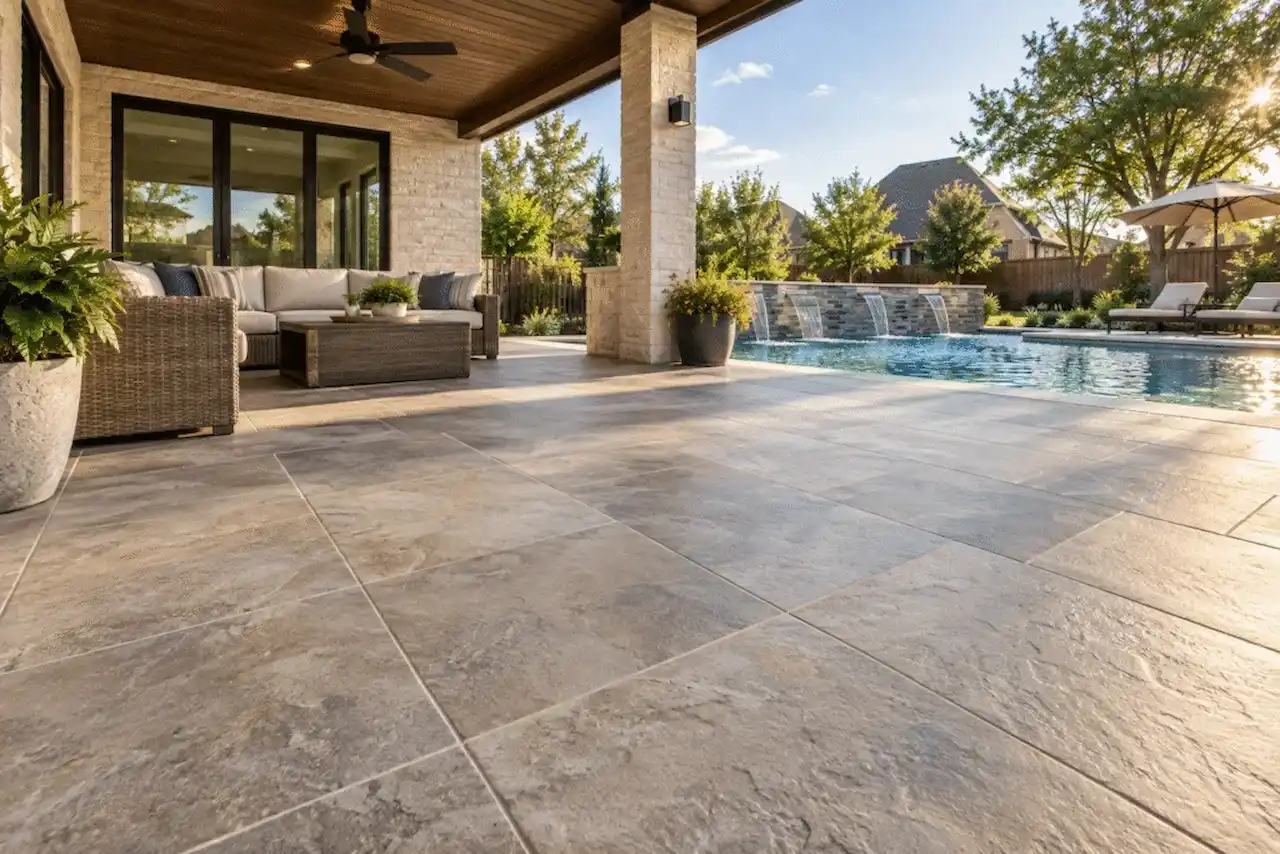
Porcelain pavers are the most reliable choice for outdoor applications in DFW. They’re frost-resistant, dense, and available in slip-resistant finishes. Porcelain also holds up to UV exposure better than most materials, so colors stay consistent year after year.
We install a lot of porcelain pavers on covered patios, pool decks, and outdoor kitchens. They mimic natural stone, wood, or concrete but require far less maintenance.
Natural Stone
Travertine, slate, and flagstone are popular for their natural look, but they need more care. Natural stone is porous, so it must be sealed regularly — especially in areas exposed to rain or pool water. It also develops patina over time, which some homeowners love, and others don’t.
If you want natural stone, plan on resealing every 1-2 years and accepting that the surface will change as it weathers.
Ceramic Tile Outdoors
Standard ceramic tile is not rated for outdoor use in Plano. Ceramic absorbs more water than porcelain, and it’s more likely to crack in freeze-thaw cycles. If a tile isn’t specifically labeled for exterior applications, don’t use it outside.
Key Factors to Consider Before Choosing Your Tile
Exposure to Weather
Is your patio covered or fully exposed? Covered areas have more flexibility. You can use materials with slightly higher absorption rates because they’re protected from direct rain and snow. Fully exposed patios need the most durable, weather-resistant options.
Foot Traffic and Furniture
High-traffic areas and spaces with heavy outdoor furniture need thicker, more durable tile. Porcelain pavers 20mm thick can handle furniture weight and constant use without cracking. Thinner tile works fine for low-traffic covered patios.
Surface Texture
Smooth, polished tile looks great in photos but becomes dangerously slippery when wet. For outdoor areas especially around pools, choose tile with a textured or honed finish. It’s safer and still looks polished.
Grout and Long-Term Maintenance
Outdoor grout needs to be sealed and maintained just like the tile. Unsealed grout absorbs moisture, stains easily, and breaks down faster. If you don’t want to reseal grout every year, consider epoxy grout or wider joint spacing to reduce maintenance.
When Not to Tile Your Patio
If your patio has major drainage issues, settling problems, or an unstable base, tile isn’t the right solution yet. You need to fix the foundation first. Tile installed over a shifting or poorly draining surface will crack no matter how good the material is.
Also, if you’re working with an extremely tight budget, outdoor tile may not be your best option right now. Proper outdoor installation requires the right substrate, waterproofing, and materials; cutting corners leads to expensive repairs. In those cases, stamped concrete or pavers might make more sense until you’re ready to invest in tile.
What to Expect During Installation
Outdoor tile installation takes longer than indoor work because the substrate and waterproofing have to be done right. We prep the surface, ensure proper slope for drainage, apply a waterproof membrane if needed, and use thin-set mortar rated for exterior use.
Most patio tile jobs in Plano take 3-5 days depending on size and complexity. We don’t rush it outdoor tile that isn’t installed correctly will fail within a couple of years.
Frequently Asked Questions
Can I use the same tile indoors and outdoors for a seamless look?
Only if the tile is rated for both applications. Some porcelain tiles are suitable for indoor and outdoor use, but you need to verify the absorption rate and slip rating before using them outside. Most interior-only tiles will not hold up to weather exposure.
How do I know if tile is slip-resistant enough for my patio?
Check the tile’s slip rating look for a DCOF (Dynamic Coefficient of Friction) rating of 0.42 or higher for wet outdoor areas. Textured and matte finishes are generally safer than polished surfaces.
Does outdoor tile need to be sealed?
Porcelain pavers typically don’t need sealing, though some homeowners seal grout lines to reduce staining. Natural stone always needs sealing, and it should be resealed every 1-2 years depending on exposure and traffic.
Will my patio tile crack in a North Texas freeze?
Tile rated for outdoor use with low water absorption will handle occasional freezes without cracking. The key is ensuring the tile is properly installed over a stable base with correct slope and drainage. Standing water and poor substrate cause most freeze-related damage, not the tile itself.
How long does outdoor tile last in Plano?
Properly installed outdoor porcelain can last 20+ years with minimal maintenance. Natural stone lasts just as long but requires more upkeep. Lifespan depends on material quality, installation, and how well you maintain it.